NO TOUR, NO FEE! Family Owned & Operated Since 1996 • 3,000+ Five-Star Reviews • TripAdvisor 94/100
Palancar, Colombia, Paradise Reef, Chankanaab, and El Cielo, ranked by depth, difficulty, marine life, and who each site is actually best for. Find your perfect reef before you arrive.
Cozumel sits at the heart of the Mesoamerican Barrier Reef, the second-largest coral reef system in the world, stretching over 600 miles from Mexico's Yucatan Peninsula down through Belize, Guatemala, and Honduras. That geographic accident makes Cozumel extraordinary: the reef hugs the western shore of the island with remarkable proximity, and the water is protected from Atlantic swells by the island itself, keeping conditions calm almost every day of the year.
The result is water that is almost always clear, calm, and warm. Visibility of 60 to 100 feet is routine. Coral coverage is among the healthiest in the region, owing to Cozumel's status as a protected biosphere reserve. Nurse sharks, eagle rays, sea turtles, and hundreds of species of reef fish are permanent residents, not rare sightings. On any given snorkel tour, you will see marine life that divers elsewhere in the world specifically travel to find.
With five distinct snorkel sites, each with its own character, depth range, and best use case, choosing the right one before you arrive makes a meaningful difference. The guide below breaks down exactly what makes each site special, who it is best for, and what you can expect to see in the water.
Palancar is Cozumel's most iconic reef and one of the most photographed dive and snorkel sites in the entire Caribbean. The formations here are massive: pillars of coral rising from deep blue water, draped in sea fans and sponges. Visibility routinely exceeds 100 feet, and the coral health is outstanding. Because the site drops to 40–80 feet, this is not ideal for casual snorkelers. But for those comfortable in open ocean, floating above Palancar and watching eagle rays glide past is a defining Caribbean experience.
Marine Life
Eagle rays, nurse sharks, sea turtles, coral pillars
Best For
Experienced snorkelers comfortable in open water
Pros
Cons
Colombia Reef offers one of the most enjoyable drift snorkel experiences in Cozumel. The current moves you along effortlessly over a landscape of towering coral formations and dense sea fans. Green sea turtles are practically residents here, and sightings are almost guaranteed on most visits. The reef sits slightly shallower than Palancar, making it accessible to intermediate snorkelers who are comfortable in moving water. Colombia is often combined with Palancar or Paradise Reef on multi-stop snorkel tours.
Marine Life
Green sea turtles, lobster, moray eels, parrotfish
Best For
Snorkelers who enjoy drift snorkeling with light current
Pros
Cons
Paradise Reef is the most consistently crowd-pleasing snorkel site in Cozumel for mixed-ability groups. The shallower depth, mostly 10 to 25 feet, keeps snorkelers close enough to the coral to see every detail without needing to dive down. The reef itself is healthy and colorful, with dense populations of parrotfish, French angelfish, and blue tang. It's close to the cruise pier, meaning many tour boats stop here on shorter excursions. If you're snorkeling for the first time or traveling with kids, Paradise Reef is the right choice.
Marine Life
Parrotfish, angelfish, damselfish, soft coral gardens
Best For
Families, first-timers, and those who prefer shallower water
Pros
Cons
Chankanaab National Park offers the most accessible snorkeling on the island. You walk into the water from a calm beach, there is no boat required, and the park staff are on hand to assist beginners. The underwater terrain includes an artificial reef program with statues and structures that have attracted marine life over the years. The fish here are accustomed to people, which makes close encounters common. Park admission is required (around $26–$35 USD), and the site can be crowded, but for absolute beginners it is unmatched in convenience and safety.
Marine Life
Sergeant majors, snapper, small reef fish, artificial reef features
Best For
Complete beginners, non-swimmers with a vest, families with young children
Pros
Cons
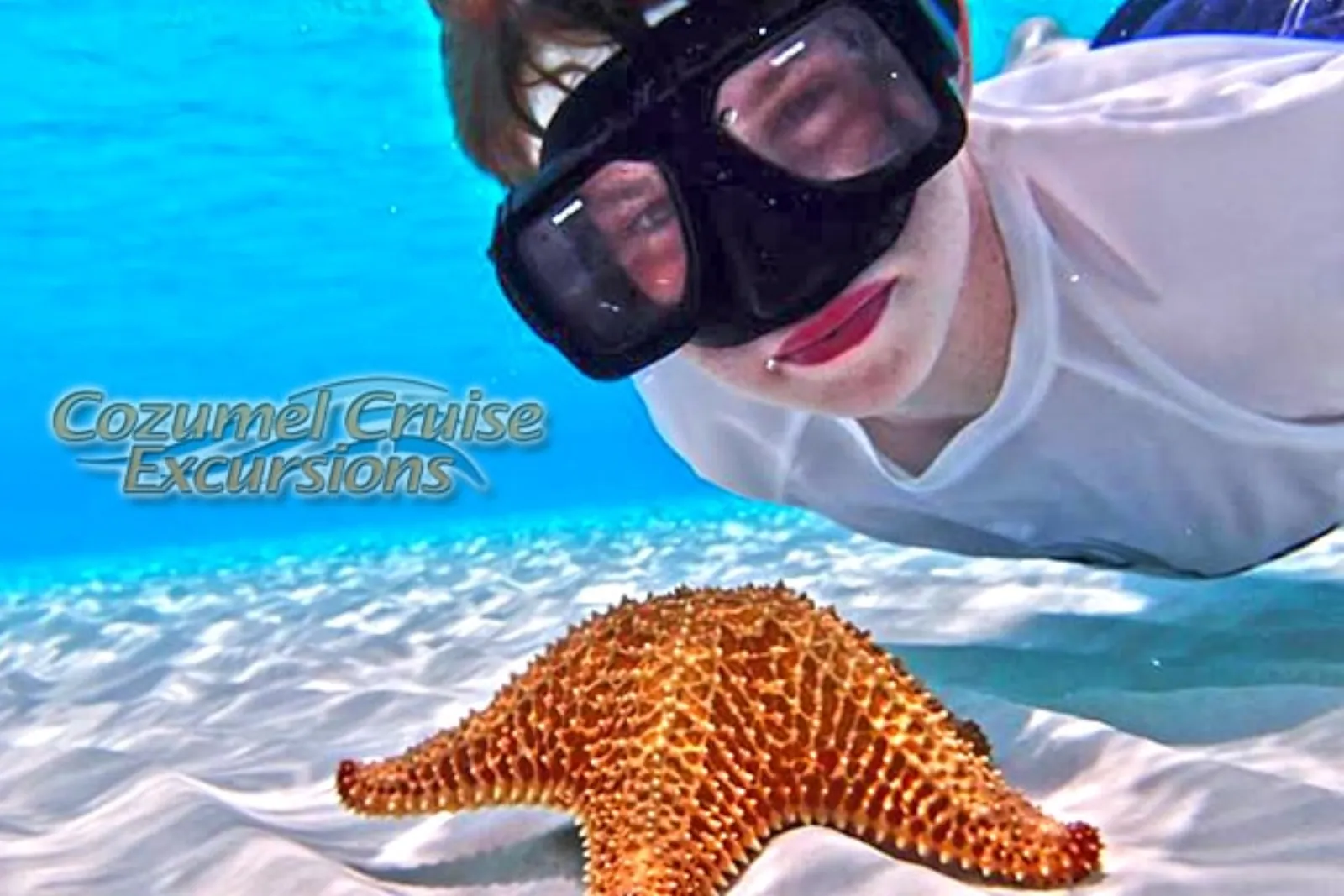
El Cielo, which means 'the sky' in Spanish, earns its name from the hundreds of orange and red cushion sea stars scattered across a brilliant white sandy seafloor in just 5 to 8 feet of crystal-clear water. You are essentially floating above a constellation of starfish. It is not a coral reef experience. It is entirely different from any other snorkel site on this list. El Cielo is often combined with a visit to a coral reef on the same tour, giving you both a traditional reef experience and this one-of-a-kind sandy shallows. Children and adults alike are consistently delighted by it.
Marine Life
Hundreds of non-stinging starfish on a sandy seafloor
Best For
Anyone. The starfish floor is unlike any other snorkel site
Pros
Cons
| Criteria | Palancar | Colombia | Paradise | Chankanaab | El Cielo |
|---|---|---|---|---|---|
| Depth | 40–80 ft | 20–50 ft | 10–25 ft | 5–15 ft | 5–8 ft |
| Difficulty | Advanced | Intermediate | Beginner+ | Beginner | Beginner |
| Boat Required | Yes | Yes | Yes | No | Yes |
| Turtles | Frequent | Almost always | Sometimes | Rare | Rare |
| Coral Quality | World-class | Excellent | Very good | Moderate | No coral |
| Visibility | 100+ ft | 80–100 ft | 60–80 ft | 30–50 ft | 50–80 ft |
| Crowds | Moderate | Low–Moderate | Moderate–High | High | Low–Moderate |
If you have never snorkeled before or are not fully confident in open water, start with Paradise Reef or El Cielo. Both sites are shallow enough that standing up is possible, and the water is calm and protected. Paradise Reef gives you colorful fish and healthy coral at 10–25 feet. El Cielo gives you a unique starfish experience in a safe, flat-calm environment. Either makes a perfect introduction to snorkeling in Cozumel.
If you prefer shore access with park amenities and no boat required, Chankanaab Park is the safest and most convenient option. Lifeguards are on site, equipment rental is available at the beach, and you can go in and out of the water at your own pace.
If you have snorkeled before and want the best possible reef experience, Palancar Reef is the answer. Nothing else in Cozumel comes close to its coral formations and the scale of marine life you encounter. Visibility is almost always over 100 feet, eagle rays are frequent, and the sheer size of the reef means every boat visit feels different.
For those who enjoy drift snorkeling, Colombia Reef is a close second. The current does the work for you as you glide over dense formations with near-guaranteed sea turtle encounters. Most multi-reef tours combine Palancar and Colombia in a single trip, which is the optimal experience for serious snorkel enthusiasts visiting on a cruise.
Peak visibility season. Trade winds keep the air comfortable. Water temperatures sit at 78–80°F. Calm seas on the western (leeward) side where all major reef sites sit. This is the best overall window for snorkeling, and visibility frequently exceeds 100 feet at Palancar and Colombia.
Water warms to 82–84°F. Calm seas, slightly lower visibility than peak dry season but still outstanding at 60–90 feet. Fewer cruise ships than the winter peak, which means less competition for tour spots. An underrated time to visit.
Water hits its warmest at 84–86°F, which is pleasant for snorkeling. However, this period brings the possibility of tropical storms, which can spike wave height and drop visibility to under 30 feet for days at a time. Most days are still calm and beautiful, but you should book with a no-tour-no-fee operator. Sargassum seaweed can be a factor in August and September.
Our snorkeling tours visit Palancar, Colombia, Paradise Reef, and El Cielo . Choose the experience that fits your group and your comfort level.
NO TOUR, NO FEE guarantee | full refund if your ship doesn't dock